Saturday, July 23, 2011

Meltdown

I was expecting a heated battle on the first day of the First Manassas 150th Anniversary skirmish. I didn't know that battle would be against my system.

Everything is looking up. I have a few hours of decent sleep on my side, some breakfast, and now I'm out the door in the rental car with an 18-pack of water for my fellow Southern compatriots of the 2nd Virginia -- the 1st Virginia in a special role for this occasion. But I'm going to have to park at a satellite lot with the spectators, given that re-enactor parking is reserved for those who got to the site at the crack of dawn -- and I needed that sleep.

I am dressed for battle: wool shell coat and pants with suspenders, shirt underneath, kepi on top, stiff leather brogans on the bottom. I'm not lugging a gun or other equipment; I've sent those on ahead with other gear through the courtesy of a brother in arms. I'll strap it all on when I get to camp.

That camp, I soon find, is going to be a hike, a shuttle bus ride, and then another long hike. I anticipate the leg work. I anticipate the muggy heat. But it's morning, I think, and the worst of the heat or humidity isn't here yet.

I make it to the shuttle bus at 8am, lugging the 18-pack of Aquafina all the way from my car to the bus seat. "That guy's got the right idea!" a staffer shouts to me on the way there. I'm tired, but it's nothing I can't handle. And now I'm in an air-conditioned bus, and I don't think the rest of the journey will be all that hard.

I step off the bus with the gaggle of spectators and a couple of fellow re-enactors, and then the hike really begins. What I figure will be a short hike through the battlefield to the camp becomes a long hike around half the perimeter of the battlefield, after I realize the bus can't stop any closer. Now I know why so many spectators are walking. But they're in shorts; I'm in wool. They're carrying maybe a chair, or a backpack. I'm lugging that case of Aquafina.

As I trudge through the morning march, the humidity attacks. I shift the water to more comfortable positions. A kind gentleman offers to carry one end of it for me. Then a lady offers the same after I make it past the battlefield bleachers and the food vendors. I have to pause. I have to rest.

Now, where are the rest of my fellow soldiers? I've gotten a location, but I need to find it. I plod on through the outskirts of the Yankee camp, where troops are already forming up and drilling. I don't like the looks of this. I can't be late. But I have to stop and rest while bottles of water fall out of the shrink-wrapped case as I soldier on. I puff. I pant. But I'm gonna make it.

I get to the crossroad where I think I'm supposed to be headed and encounter a provost.

"Do you know where Col. Scott's battalion is? Second Virginia?" I ask.

"What brigade," he answers.

"Stonewall Brigade."

"I think they just moved out."

My heart sinks, just as I'm sinking to my knees to regain some strength. But soon a friend spots me.

"Hey Christopher!" he greets. "We're right up here."

"I brought water for the cause," I say. "But I need to cool down."

"Great! We'll put that in the cooler and get some fresh for you."

"Private Francis!" our head commander greets.

"I need to cool down -- now," I say, sinking to the ground. Fellow soldiers take a look at me and see this is more than just a water-bottle job.

"Get some ice!" one says.

Within moments, a makeshift medical triage is placing ice on my forehead, down my neck, on key arteries, and anywhere else they think I need it. Someone delivers a bottle of Gatorade, and I begin gulping it down.

"Keep holding this," our medical expert tells me. "Let it stay on your arteries and cool your whole system down."

Unlike four years ago at Picacho Peak, I'm not nauseous or sick -- just way too hot, and probably way too tired. As I sit and soak up cool, another familiar face appears in the corner of my eye.

"Christopher, are you all right?" the Sergeant said.

"Yes. I just need to cool down."

"You have to get acclimated to this heat. We've been here for three days, and we're still getting acclimated to it. I don't think you should go out today. I know it's not fun sitting out, but it's not fun either if you're on the battlefield and you overheat."

Others agreed. "They've been taking people away in ambulances."

So day one will see me on the sidelines instead of the battle lines -- Picacho Peak all over again. I really should be in better shape, I tell myself. But I thought I was doing all right for awhile.

The only thing I will shoot this day is a pocket camera, capturing HD video of my 2nd Virginia compatriots as they come to the aid of Stonewall Jackson and the Confederacy. At least 1,000 people, likely more, are watching from the sidelines and the bleacher seats -- or under them -- as the Blue and Grey engage in what the public-address-system narrator calls a "gigantic rugby match." One side pushes, the other pushes back. Reinforcements come in. Lines advance. Lines retreat. Muskets crackle and pop in a chorus against an aria of artillery fire. More than an hour of this, and haze is all over the battlefield.

"You are getting a good idea of what a real Civil War battle would look like," the narrator observes for the crowd. "Multiply the sounds of the musket fire by four and you'll get an idea of just how many were out there." I know thousands of re-enactors are involved in this anniversary skirmish. I forget the exact count. But my eyes are trained on finding the 2nd Virginia. For most of the morning, they've stood and waited to go on, doing their best to stay cool and hydrated, with their jackets off until showtime. They're going in the second half of the battle -- a long time to wait, but worth it in the end.


From afar, I pick them out on a hill, as they blend in with the rest of the soldiers. They advance, fire, advance, and fire again. Historic combat is not for the impatient. I watch as they push to victory. Maybe they don't "give them the bayonet," as Jackson famously quoted, but they look sharp in battle from where I can see. And I wish I was with them, marching and firing, and savoring the victory. I wish I was praying with them afterwards, thanking them for GOD's protection. I can pray on my own, anytime. Among friends, however, the spiritual experience rises to another level.

I capture a few more pictures of them thanking the crowd before heading back to camp. All around, people ask how I'm feeling. Better, I say, but I'm still disappointed -- disappointed at not going out with them.

"You'll be with us tomorrow," my Colonel reassures. "Shouldn't have worn that coat and made the march on the double-quick."

"I had the water with me, too," I add, owning up to another tactical mistake. "But I didn't want to come into camp without helping you guys. I knew you'd need it."

"You were carrying water?" another soldier asks.

"Yes."

"How much?"

"Oh, a 12-pack, I think." I can't remember.

"Was it a case?"

"Yeah."

They are grateful and appreciative, my fellow Confederates. They can sympathize with my disappointments and still encourage me on to victory. They are living life in the right perspective, loving the moment but not succumbing to it. They know they are not merely here to fire muskets. None of us are. And they are fighting their own battles against the 100-degree sticky heat.

"We're getting to to point now where you were this morning," one tells me.

Soldiers depart for cooler quarters after the camps are closed to the public. The gentlemen play cards while the ladies converse. The commanders sip a few light refreshments in honor of a successful campaign.

Our talented dulcimer player hammers out "Ashkotan Farewell," and I slip into a solo waltz, wishing Madame were here with me to see it, eyes tearing over this tale of longing and love. I still have something left in the tank for a dance.

"The question isn't, 'How did they do this?'" the battlefield narrator observed earlier, "but, 'Could I do that?'" I'm still not sure. Union, Confederate, Yankee, Rebel... allegiances don't seem to resonate on this day. What awes us is the stamina and bravery, the horrendous heat eclipsing the greater truth of men willing to die for their families, their livelihoods, their freedoms, and their nation.

Re-enactors get up at the end of the day and go back to their other lives and times. But within them -- at least the ones I march with -- is a deep reverence for the original people who fought this fight. It extends to the people fighting now, and those who will be in the next battles. It is patriotism by doing, supporting the troops by taking up the arms and tactics of their most celebrated confrontations. Appreciation flows from connecting with at least a tinge of the fear many people will never know.

"This is the big show," our commander observes about the size of this re-enactment compared to others we've been in. It's the Major Leagues. But we all know it's no "show," and it's not just for show, and our continuing orders are to make sure everyone who sees us realizes that in the end.

Friday, July 22, 2011

To Virginia!

From Tucson to Manassas in 24 hours or less (preferably less):

3:40am: Wake. Still getting used to change in hours from a change in work assignment. Fortunately, I didn't have to produce last night's 10pm news.

4:15am: At work. Yes, work. Work before play. Work before battle. Yes, work can be a battle. That's why they call it work. Consume first cup of coffee.

4:30am-6:am: Run teleprompter for morning newscast. Sneak in more cups of coffee. Amazed that it is actually working. It must have come from the Fukujima plant.

6:30am: Caffeine in full force. Start working on noon show. Start grousing for a lead story.

7:30am: Good grief. Manassas will be hitting 100 degrees or more this weekend, and I will be wearing wool. The rest of the east coast is burning up. In Tucson, we call that typical.

8:00am: Bomb goes off in Oslo, Norway. I may have my lead.

9:00am: Still working, looking for more breaking news.

11:30am: Nothing much happening locally. But Norway is a mess right now. There's the lead.

Noon: Show time. Slip in a story on the Manassas heat. Anchor notes that I will be in the heat of battle this weekend.

12:45pm: Drive to Tucson International Airport. Grouse for cheap parking. Get it after two inspections of dodgy lots.

2:30pm: Board American Airlines after wolfing down a cheeseburger. TSA was kind to me -- they didn't pull me over for an enhanced pat-down.

3:45pm: Reading Matthew 16. Guy in the seat next to me is reading Plato's Republic. If I had more smarts, I'd debate with him what Plato would think of our Republic.

4:00pm: The plane has wi-fi, but you gotta pay $10 for it. Pass.

7:00pm: I've jumped two time zones, but the plane has arrived early at DFW -- a little too early. We have to wait for another plane to exit the gate before pulling in.

7:30pm: Need to change from Concourse A to Concourse C at DFW. Hope there's a good place to eat in the departing terminal.

7:50pm: Skype chat with the folks in California via the iPad. Way too cool. They aren't sending me video, but they can at least see me gobbling down a snack.

8:20pm: The plane that will take us to Washington is here. Our pilot is not. He will not be here for another 40 minutes. American Airlines says they will board us all so that the pilot will just have to step in and then will be on our way. Of course, it can't be that easy. Hopefully this pilot can fly fast like the last one. "Time to take a walk," says a passenger next to me. Good idea.

9:00pm: "That's not a carry-on, sir; that's a checked bag." Well, why didn't you folks tell me it was a checked bag in Tucson, after it fit into the sizing box and the overhead bin on the first flight? They insist on checking it. My delay to my hotel just got longer.

9:45pm: We're in the air at least an hour behind schedule.

10:00pm: Look for ways to contort body in airline seat to sleep comfortably on plane. Fail.

1:30am: Arrive at Dulles. Wait for 15 minutes for a tram to take us to the baggage claim.

1:45am: A line of people, your humble servant included, board a shuttle bus for Hertz. When we arrive, one person is working the counter, as expected for this time of night, and he apologizes because he's having computer problems. "Tell me this isn't a government operation," I say to a lady next to me, parroting a line from Apollo 13. "The government would be more efficient," she replies.

2:10am: After a prayer behind the wheel of a Toyota Yaris, I head off for Manassas. I don't make the mistake I made two years ago and end up on a toll road without change.

2:30am: Arrive at the hotel, which is undergoing renovation and sharing parking spaces with several large dumpsters, leaving nothing for me, after all the other guests are bedded down for the night. After a fruitless search, I park at the Cracker Barrel across the street.

2:45am: Nobody is at the front desk, but amazingly, my room key is sitting there, along with my pass bracelet to get me through to tomorrow's event. Goodnight and GOD Bless the hospitality staff.

Sunday, July 17, 2011

Reel To Reel: Harry Potter And The Deathly Hallows: Part 2

It all comes down to this.

Going Rate: Worth full price
Starring: Daniel Radcliffe, Rupert Grint, Emma Watson, Helena Bonham Carter, Ralph Fiennes, Michael Gambon, Alan Rickman, Robbie Coltrane
Rated: PG-13
Red Flags: Dark fantasy violence, one mild profanity

Oh Harry, how you've grown up. In 2001, when Harry Potter And The Sorcerer's Stone made it to the big screen, it played like a coming-of-age Wizard Of Oz, only a bit darker. Now, nearly 10 years later, we've watched Harry (Radcliffe) and his pals Ron (Grint) and Hermoine (Watson) grow up both in the movie saga and in real life. They're not cute little wizards and witches anymore. They're adults with the world upon their shoulders, and you can feel it all through the final chapter of the eight-film series.

In order to defeat the evil Lord Voldemort (Fiennes), Harry and company must finish the job from Part 1: destroying a series of objects called Holcruxes that give the evil one his invincibility. These things are hidden away in different places, but amazingly, none of them are outside England. I wonder why the dark one didn't think about that. Then again, Voldemort mysteriously doesn't have the ability to give himself a decent nose job. Hogwart's School for Witchcraft and Wizardry resembles a prison camp now that Servus Snape (Rickman) has taken over as headmaster. We're still not completely clear where his allegiances lie, but you'll soon have your answer.

I kept comparing the final Potter to the final installment of Star Wars. The pacing of this film reminded me more of a suspense-thriller than an action fantasy. These characters talk a lot. They brood. They flirt with death more times than any reasonable person would tolerate. Return Of The Jedi was dark in places, but with an overlay of hope: would Darth Vader find the good within him? With Voldemort, we have no such hope. He's bad to the bone. Our main question is whether Harry will live or die trying to save the world from him.

All of this is pretty heavy stuff for young children. But like the characters they love, they have grown up too, and as everyone comes of age together, all of the material matures. HP7: 2 is no kids' movie, even though marketing might steer it that way. And I'm glad it's no Twilight, either, even though there's a splash of romance.

Without spoiling the ending, let's just say the film leaves itself an out for another edition. I'm sure Hollywood will push for it, given the gigantic money flowing into the coffers from this saga.

Saturday, July 9, 2011

To Hack With It

Media tycoon Rupert Murdoch is closing down London's 168-year-old News Of The World after a phone-hacking scandal. Reporters broke into voicemail accounts of soldiers and dead children -- among some 4,000 people -- looking for nuggets they could blow up into headlines. As I go to press this afternoon, at least three people have been arrested in connection with the scandal. The paper's chief executive, Rebekah Brooks, faces questioning by police investigators over what she knew and when she knew it, but she hasn't been fired, and her bosses have waved off her offers to resign.

I can believe the defense that the hacking was limited to a limited number of unethical reporters, but I'm not willing to let Brooks off the hook. At KOLD News 13, when somebody comes up with sensitive information, our bosses know about it, and they know where that information came from. We have anonymous tipsters. We have confidential sources. We have viewers who love watching Dan Marries, Heather Rowe, Chuck George, Scott Kilbury, Kayna Whitworth, Mindy Blake, Erin Jordan, Mark Stine, Teresa Jun, and the rest of the gang, and they want us to beat the competition with their inside info. We have Twitter and Facebook friends helping us cover the news. We don't need to hack phone mails. We would never dream of doing that. Our News Directors and General Managers have made it clear, even if it would give us competitive advantage.

That's why the News did it. Britain's tabloid industry is thriving and ultra-competitive. Rupert's weekly wanted to win at all costs, and it ultimately sold its soul. Now it's rotting in publishing's Hades. Murdoch didn't believe the paper was too big or too old to fail, but I don't believe he killed it as a public gesture of humility. I believe he killed it to make nice with British regulators as he tries to protect and expand his media empire.

In doing so, people at the News who had nothing to do with this scandal are without jobs. At the same time, I wonder why they chose to work for the paper in the first place, given that it had a dubious reputation long before the hacking. We all gotta have jobs, but there are TV stations (which I won't mention) I would never work for if I valued my career, or more importantly, my relationship with GOD.

Jeff Jarvis of BuzzMachine offers some deeper insight on the scandal and privacy rights here.

Jury Duty

The rage and grumbling over the verdicts in the Casey Anthony trial should remind us all why sworn jurors decide guilt or non-guilt, not the news channels, not the bloggers, not the crowds outside the courthouse, and especially not Nancy (Dis)Grace. In the jury room, the standard for proof is "beyond a reasonable doubt." Everywhere else, the standard is whatever we want it to be, mostly "guilty until proven innocent."

Prosecutors had holes in their case. Anthony had a first-rate lawyer. Admit it: when you hire an attorney to defend you in a criminal trial, you want that legal eagle to get you off -- not present a spirited defense, but get you off. Richard McFaddin, a Kansas City defense attorney who successfully defended notorious "town bully" Ken Rex McElroy against 20 of 21 felony charges, admitted he was a "hired gun," a person paid to help his clients beat the rap.

"Yeah, but I'm innocent. Casey is guilty as sin!"

Perhaps. But trials aren't about what really happened, they're about what you can prove -- beyond a reasonable doubt. Suspicions are not admissible as evidence. Nancy (Dis)Grace is not representing the state. Gut feelings do not tilt the scale towards conviction. "Not Guilty" does not mean innocent. It often means, "Not Proven."

Ironically, so many of us think we're smarter than that knuckleheaded Casey Anthony jury, yet so few of us actually are willing to serve on a jury. My employer, thankfully, is supportive of jury service, even though working journalists have nary a chance of surviving voir dire. Federal Law requires employers to support jury service. We shouldn't have to make excuses or fear for our jobs.

Justice is not beautiful, clear-cut, or convenient. If we are not teaching this in our government classes, our understanding of civics is even more abysmal than I thought. And if we are going to hate on jurors for deciding a case based on facts, standards and instructions rather than mob mentality... then we should be praying for GOD to help us all.

Sunday, July 3, 2011

From The Logs Of Captain Bartholomew Burgundy

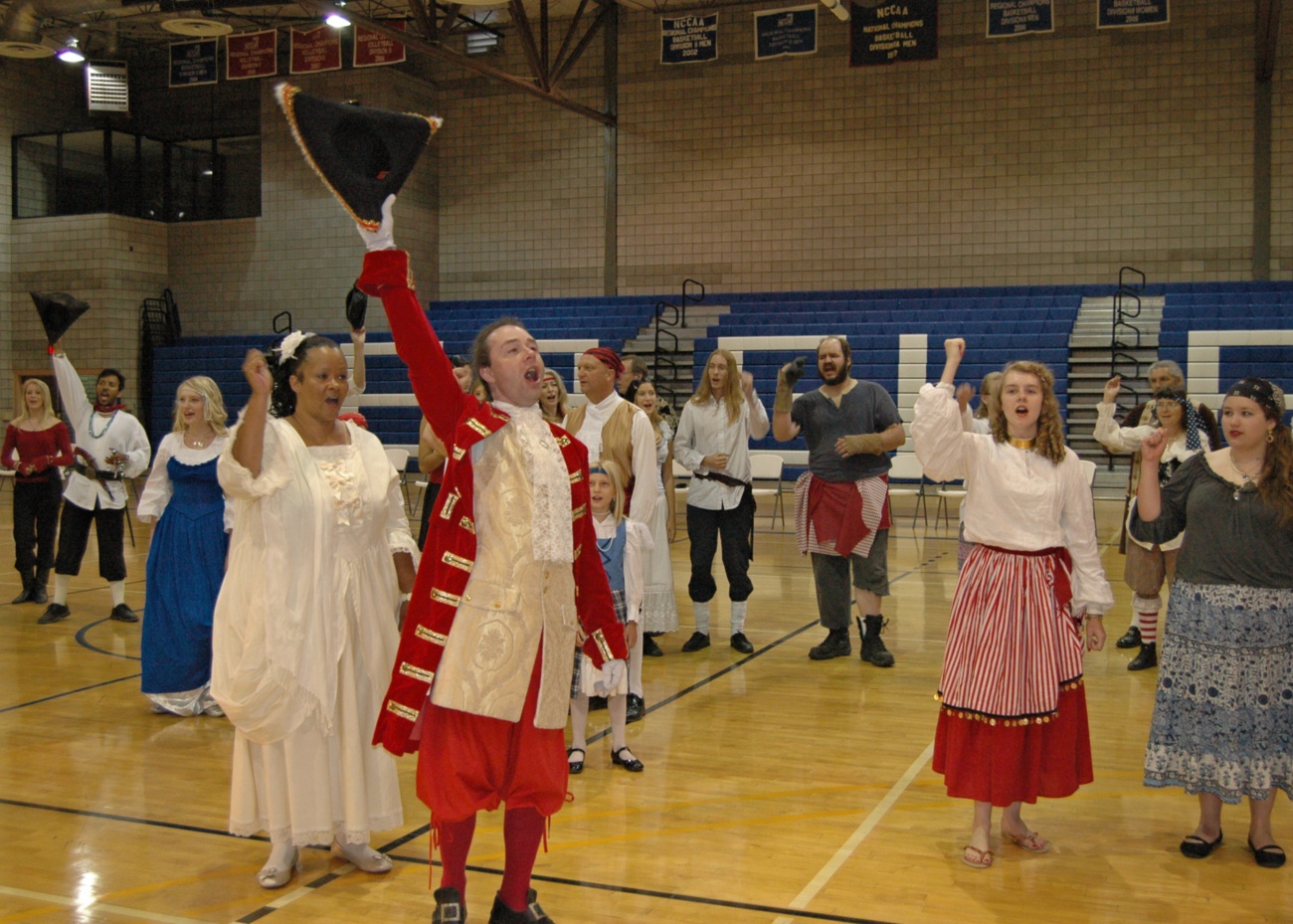
It took nearly a month to sort things out, but I can finally reveal the contents of a bottle sent to me by Captain Bartholomew Burgundy containing several pictures from last month's Buccaneer Ball.

Unfortunately, water leaking into the bottle washed out the good captain's notes, so I'm forced to add my own commentary. I could wait until he returns to port, but I don't want to delay things any longer.


Captain Burgundy and his esteemed lady friend, Madame Noire, posing for a pre-ball memento.  Notice the charming glow from her countenance.  I gather she is most happy to see and dance with him once more after more than a year at sea.


A tribute to America before the festivities begin.  Captain Burgundy may serve England, but he's the most patriotic privateer I've ever seen.


Three cheers for the USA! HUZZAH! HUZZAH! HUZZAH!


As always, a procession kicks off the merriment.  From the way Captain Burgundy holds his lady's hand, it looks like he has spent much time in the ballrooms of Europe.  One wouldn't expect such courtly gestures from a scurvy knave.  Of course, Burgundy was never that.  I also notice he's wearing a different weskit (vest) this time around, polishing up his act.


A circle dance, a time to prance, for the ball, one and all.


HUZZAH!


Captain Burgundy didn't include many photos of the livelier dances, but I suspect that was by design. Here we see him showing off more of his courtly dancing with his favorite partner. I hear he enjoys the minuet immensely. I'm not sure if that's what he's dancing here, but it's certainly something graceful to honor Madame.


Gentleman that he is, he saves a few dances for other ladies.


And of course, he practices his honors.

I'm beginning to think Captain Burgundy isn't even a privateer, much less a pirate. How can someone who enjoys dancing so much be an effective raider of Spanish ships? I'll have to ask him the next time I see him. For now, realize he was surrounded by many ruffians and knaves who had a Jolly Rodger's good time, and you can see more pictures of them here, including a curious cover of Buccaneer's Quarterly which shows the Good Captain facing a bit of, well, trouble on board.

Saturday, July 2, 2011

Reel To Reel: Super 8

Close encounters of the Kodachrome kind.

Going Rate: Worth full price
Starring: Kyle Chandler, Elle Fanning
Rated: PG-13
Red Flags: Language, sci-fi violence, some gross scenes

Producer Stephen Spielberg had to see a little of himself in this film, which he produced for writer and director J.J. Abrams. Make that a lot of himself. It's Close Encounters Of The Third Kind mashed up with The Goonies and multiplied by Cloverfield. Spielberg has to be reliving the aspirations of his youth set off when he saw Lawrence of Arabia and knew he wanted to direct.

I can't remember anybody making Super 8 independent films when I was in junior high. By 1979, when this movie takes place, my gadget-loving father had already ditched our Elmo 8mm sound camera for a weighty Quasar VHS portable. It threatened to put grooves in his shoulders, and it cost a small fortune, but you didn't have to develop anything, and you didn't have to worry about shooting tight. So please forgive me if I find the concept of a bunch of 1979 youngsters focused enough to make a zombie-horror film with "production value" a bit beyond my grasp. I wonder how many kids know what production value means. I also puzzle how a kid from a large rambunctious family acquires enough money, skill, and quiet time to learn old-fashioned film editing. That could be a movie in itself.

But back to the movie I'm reviewing. It opens in a small Ohio town which has just lost a worker in a factory accident. The victim is the mother of Joe Lamb (Jason Courtney), who withdraws into a cold existence. His father Jackson (Chandler), a deputy sheriff, doesn't know much about parenting. He would rather shove the boy off to camp than let him help his friend Charles' (Riley Griffiths) moviemaking efforts for a film festival. Joe and Charles and their buddies are a studio in sneakers, complete with sound, make-up and special effects departments. I bet you they even know about three-point lighting.

As the kids are filming a scene at a train station, they unwittingly become witnesses to a massive derailment, and it's the most spectacular one I've seen on film since The Fugitive. What's more, in one of those derailed cars is some kind of mysterious payload. Once it's unleashed, strange things start happening all over town, making the kids' horror flick look like a family movie. As you would expect, the military moves in and starts covering things up, leading to the inevitable quest to learn the truth.

It's very easy to let a film full of kids get loud and out of control by themselves, without any effects work. Director J.J. Abrams keeps this from happening, though, and the film becomes a creepy, effective thriller until it hits a sentimental moment that evokes memories of another Spielberg film. I dare not say which one.

Overall, though, I highly enjoyed Super 8 and its love of, well, sci-fi movies. Abrams and Spielberg wouldn't have come together on this movie if they didn't feel a need to create a kind of entertainment that honored their roots. This film does a fine job.

As a bonus, Paramount and Apple have released a Super 8 app for iPhones, iPods, and iPads that lets you make digital movies with the retro look of those old home cameras. Neat stuff!

Reel To Reel: Cars 2

We're running a little hot tonight.

Going Rate: Worth full price (3D not necessary)
Starring: Voices Of: Owen Wilson, Larry The Cable Guy, Michael Caine, Eddie Izzard, Emily Mortimer, John Turturro
Rated: G (but may be too intense for younger children)
Red Flags: Cartoon action gunshots, some mild toilet humor

The original Cars took the idea of an alternate motor-personified universe and made it fun and nostalgic. The sequel expands on that idea and runs around the world with it, producing a film that's visually exciting even if it's not always heartwarming. Cars 2 is a tribute to James Bond's Aston Martin, a salute to imports, and a loving tweak of two notorious clunkers, both made by the now-defunct American Motors Corporation: the dreaded Pacer and Gremlin. I think I also spotted a Pinto in there somewhere.

Our hero from the first film, Lightning McQueen (Wilson) is back home in Radiator Springs, Arizona (loosely related to Peach Springs, Arizona, somewhere north of I-40 near Kingman, in case you forgot). He's resting his wheels after a winning streak on the racetrack, only to face a new racing challenge: Sir Miles Axelrod (Izzard) has come up with a clean, green fuel, and he wants to show it off in a series of international races. When Italian formula-one Francesco Bernoulli (Turturro) taunts McQueen for sitting the series out, tow-truck pal Mater (Larry) jumps to McQueen's defense, and the Piston Cup champ decides to put his R&R on hold.

As McQueen and Mater head off to start the series, skullduggery -- or, motorduggery -- is afoot. British spy car agent Finn McMissile (Caine) picks up on a secret weapon in development by a gang of thug clunkers headed up by Professor Z (Thomas Kretschmann). McMissile, who has enough gadgets and toys to make Bond's ride jealous, hooks up with fellow operative Holly Shiftwell (Mortimer) in Japan to receive a secret device from an American agent. The operation goes sideways, and the agent ends up slipping the device onto the undercarriage of Mater. That sets off an espionage thriller suitable for Spy Kids audiences but nuanced enough for adults to enjoy -- the Pixar touch.

It's Mater who has to carry this film as he takes his bumbling stick-shifter-from-the-sticks act on the road as a involuntary secret agent. This could get very old, very fast, if it wasn't for the chemistry among Mater, McMissile and Shiftwell. The film also takes us to car-populated Japan, Italy and England, which are full of colorful riffs on familiar people and places. You have to admire director John Lassiter's love of automobiles; he finds personalities in oodles of makes and models and matches them to the characters flawlessly. Even the Pope and the Queen of England get customized rides in Lassiter's universe.

The original Cars was a parable about friendship. So is this one, but not as heavily. It mainly just wants to race and have fun, and what's wrong with that? Not Pixar enough? I think that's the main problem people will have with this film. Let us not forget, though, that Pixar remains Hollywood's most consistent hit factory. They have yet to release a bona-fide clunker. That's more than I can say for the auto industry.

Sunday, June 19, 2011

Hey Dad, It Flies!

My brother and I briefly flirted with model rocketry back in 1986, several months after the Space Shuttle Challenger disaster, and not too long after a visit to NASA's Kennedy Space Center. Dad bought us both a starter kit from Estes, consisting of an easy-to-assemble rocket, launch base, igniters and a couple of engines. The starter rocket came together easily at the kitchen table. The pre-made plastic tail assembly spared us from messing with glue and triangulating all three fins in their proper locations.

"Watch out for those o-rings," Mother said, referring to Challenger's fatal flaw.

For our launch area, we picked a field behind Raytown, Missouri's Robinson Elementary, home to a baseball diamond, a couple of soccer fields, and now, three amateur rocketeers. October Sky it wasn't. Neither was it the Fourth of July. These were no bottle rockets, which tend to explode on the pad just seconds after they're lit. Our launch devices each consisted of a guide rod on a tripod base wired to a battery-powered ignition button several feet away. A key-activated lamp signaled all systems were go. All we had to do was push and play.

Model rocket igniters are not up to NASA standards. You insert the engine into the rocket's tail, and then you carefully insert the igniter, which is connected with a pair of alligator clips. If all goes well, we have liftoff. But many times that igniter burns in half and it's back to the pad for troubleshooting. Still, it beats using a lighter and a punk.

We had success from the get-go: at least two successful launches after at least a couple of misfires. Then came recovery. Model rocket engines include an ejection charge in the top which pushes out a parachute (or sometimes just a plastic ribbon), and the challenge is to get under the spacecraft before it gets snagged in the trees.

I made my second launch of the day using a basic engine -- low altitude, no frills. It shot up high enough to satisfy my expectations, but then the wind caught hold of it. That first rocket drifted into the tree line and never dropped through it.

Dad observed the disaster. "I'll get you another one," he said without hesitation.

I went on to build at least two more rockets, even getting to launch one of them in Physical Science class during my freshman year at Raytown South High School. I earned some easy extra credit points for providing my own launcher. Thanks, Dad!

Model rockets, by the way, are very cheap to build. Ten bucks will get you something you can launch over and over. Forty dollars will set you up with a complete kit. That's about what a family spends for a movie night out, including refreshments and gas.

We never returned to the grassy fields of Robinson, and I never built another rocket after 9th Grade, but the legend, as people say, lives on.

And if you have a red-and-white model rocket you found by the ball field near Robinson School, may I have it back, please?

Monday, June 13, 2011

Those Darned Activist Judges

Last week, while wildfires and talk of one congressman's private parts dominated the news cycle, the Supreme Court issued an opinion [PDF] clarifying the Armed Career Criminal Act. The majority ruling says using a vehicle to flee from police counts as a "violent felony" under the act, which is targeted at curbing repeat offenders. I was struck, however, by Justice Antonin Scalia's dissent, which reads in part:
We face a Congress that puts forth an ever-increasing volume of laws in general, and of criminal laws in particular. It should be no surprise that as the volume increases, so do the number of imprecise laws. And no surprise that our indulgence of imprecisions that violate the Constitution encourages imprecisions that violate the Constitution. Fuzzy, leave-the-details-to-be-sorted-out-by-the-courts legislation is attractive to the Congressman who wants credit for addressing a national problem but does not have the time (or perhaps the votes) to grapple with the nitty-gritty. In the field of criminal law, at least, it is time to call a halt.
So here we have Justice Scalia calling out Congress for passing flawed laws that courts have to clean up later. The delicious irony is that this undercuts Conservative arias -- which Scalia and his right-wing brethren have sung many times before -- against judicial activism. Here, Justice Scalia says the problem seems to be Congressional activism, which is where it all begins in the first place.

So what's it gonna be? Either Congress passes more precise, Constitutionally-sound laws (and actually reading the full text of those laws would be a good start), or judges have no choice but to continue their custodial duties. Those folks in the black robes who have to deal with a stack of cases arising from flaws or omissions some lawmaker didn't have the time or stones to address don't deserve the scarlet "A" for "Activist."

(Tricorn tip to SCOTUSblog for alerting me to this.)

Friday, June 10, 2011

The Pirate Prom

And finally this week, I have to show you this clip, which answers the question, "Suppose a group of pirates held a prom?"

The Plundering Pirates of Paradise did, and they came up with a night of eclectic dancing that included salsa, disco, and a Virginia Reel.


I can't say we'll be doing the Electric Slide at the Buccaneer's Ball, but you can count on a jig... or maybe two.

Dance on!

Thursday, June 9, 2011

The Pirate Crashers

What happens in Vegas stays in Vegas, or so we're told. But then I came across this video snippet from a wedding reception at Treasure Island in Vegas (only they call it "TI" now). What follows is an anachronistic display of old circle dance to modern tunes. Furthermore, the YouTube uploader says the pirates weren't officially invited to the ceremony.

You were warned. Hit it.

Wednesday, June 8, 2011

Jack Be Nimble?

If someone had staged Pirates Of The Caribbean as a contemporary ballet, perhaps it might have looked like this noble attempt, staged at the Mid Valley Mega Mall... wherever that is.


But I prefer the Pirates of Penzance, Gilbert & Sullivan's classic. This clip features Kevin Cline:


Eat your heart out, Jack Sparrow!

Tuesday, June 7, 2011

New Kids On The Ship

Now in our celebration of piratical prancing preceding the Buccaneer's Ball venture to the Western Pacific, where we find some Korean buccaneers have created that new teen-heartthrob sensation: The Backwater Boys.

Monday, June 6, 2011

The Boat Is Rockin', So Don't Bother Knockin'

You wouldn't think a bunch of mangy seafarers would have enough discipline to pull off an interpretive display of movement, would you?

I don't know the name of this group from Dover, but they defy the averages:


Ditto for this group, the Arts In Motion Irish Dance Class:


I'm sure we'll see some inspired jigs at the Buccaneer's Ball!

Sunday, June 5, 2011

Do A Little Dance, Raid A Little Ship, Get Down Tonight

Ahoy! With the Buccaneer's Ball quickly approaching, it's time for another week of dance tributes to pirates.

We know that some of them were gentlemen, but many weren't. We also know that their fleetness of foot did not lend itself well to artistic purposes, beyond jigging and maybe a few reels.

But this bunch, the Oak Mountain Craftsmen, can really shake their booty!


And for an encore, have you ever seen a pirate break dance?


Oh to be on stage and be swooned at by a giddy group of young ladies... but that's off topic.

Reel To Reel: X-Men: First Class

Groovy powers, baby!

Going Rate: Worth matinee price
Starring: James McAvoy, Michael Fassbender, Kevin Bacon, Rose Byrne, Jennifer Lawrence
Rated: PG-13
Red Flags: Action violence, mild profanity, some mild sexuality

My admiration of the X-Men franchise comes not from its action but from its altruism. Its world of mutants vs. humans illuminates the nature of prejudice and xenophobia. It raises tough questions about terrorist threats versus individual liberties and gives the brain plenty to chew on.

This prequel delves into that somewhat, but its main fascination is tinkering with one of the scariest chapters in American history: the 1962 Cuban Missile Crisis, which drove the U.S. and the U.S.S.R. to the brink of nuclear war. X-Men: First Class retools it as a covert showdown involving maniacal mutants set on annihilating normal humanity so mutants can rule over it, uninhibited by prejudices, governments, or well, just about anything else.

The picture opens in the middle of another dark historical chapter: the roundup of Jews in Nazi Germany. A young Magneto, Erik (Fassbender), sees his mother being herded into a concentration camp and notices, in his anger, he can bend the gate that is closing behind her. The Nazis capitalize on his power and begin to refine it. Meanwhile in England, Young Professor X Charles Xavier (McAvoy) notices there's a stranger in the kitchen who looks like his mother. Only it's not his mother, it's the shape-shifting blue bombshell Raven (Lawrence). And Charles can tell just by reading her mind.

The young Xavier grows up to be a hip professor in 1960's London, authoring theses on mutation and cruising chicks in a way Austin Powers would love. This whole film at times reminded me of a mash-up between the Austin Powers movies and Mad Men, with a bit of The Avengers thrown in. A CIA operative comes to Xavier for help when she notices plans for world domination forming in the back room of a Las Vegas club. They involve a high-ranking U.S. officer and a devilish creature who can disappear into thin air in the blink of an eye. Erik is on his own mission, setting out to kill the Nazi doctor Sebastian Shaw (Bacon) who built up his metal-warping skills while killing his mother.

These two missions come together, and so do Charles and Erik in a tenuous friendship laced with questions about men versus mutants. Will mutants be ultimately feared or accepted? Will the be assimilated into society or exterminated? Along the way, we're introduced to several new mutants, including one who can evolve on the spot and an oversized dragonfly. They will team up with Charles to form a squad charged with saving the world. Not bad for a first assignment.

I liked the picture's 60's vibe, and I liked its balancing of ideology and action. It's not at the level of Batman Begins, but it's there, and it's palpable. The film leaves some more room for development down the line, and I'm sure we'll see another sequel or spin-off film. Hugh Jackman, by the way, makes a brief cameo as Wolverine. But don't expect much.

X-Men: First Class is satisfying in that it makes you want more. You know that these characters will grow up, grow older, and become more interesting over time. Then again, you've already seen the four other pictures and know what happened. Yet Hollywood can re-do established film series in a short time frame, as it did with Batman and will soon do with Spider-Man. Comic books truly do exist in a world of their own.

Tuesday, May 31, 2011

Just Run, Already

Dear Mrs. Sarah Palin,

Watching your bus tour and photo-ops and the buzz that surround them, and reading you answer "Don't know," when people ask if you're running for president reminds me of a scene from the closing minutes of The Godfather: Michael Corleone is confronting the traitor Carlo when he says, "Don't tell me you're innocent, because it insults my intelligence."


Sarah -- you don't mind if I call you Sarah, do you? -- we all know what you're doing. We all know how the game is played in Washington. Your assertion that you don't know if you're running has about as much authenticity as a copy of Das Capital autographed by Margaret Thatcher.

Sarah, it's time to grizzly up and say you're running. No more claims that your campaign bus isn't a campaign bus. No bob and weave around the press. You're touring like a candidate. You're planning to hit Iowa. It's not a listening tour, it's not a unity tour, it's not a rolling pep rally for the GOP. It's the start of a campaign.

But we know why you want it this way. This non-campaign campaign gives you an exit strategy. It's an easy way to bail when the polls don't come around and the competition gets too tough. You can always claim you were never campaigning in the first place, and technically, you're right. And as a bonus, because you're not a real candidate, you don't have to answer real questions from real reporters, including the ones you like at Fox News. Really, though, since when did you worry so much about the "lame-stream media?" Or, as I contend, is Fox part of it now?

What are you afraid of? A year and a half is forever in campaign time. It's plenty of days to build and organize and woo those moderates and independents you can't stand, even though you'll never publicly admit you can't. And what can you do to your image that Tina Fey and Katie Couric haven't done already? (Katie's off the tube for now, by the way.)

Making it official now also provides you with competitive advantages. Once you're in, you'll eclipse the early birds -- Pawlenty and Bachmann and Gingrich and Cain and Paul -- and overshadow the leaders. You'll begin to thin the herd and save yourself some headaches once we head into primary season early next year, but you have to commit.

You and I know politics is no game for the meek, and championship politics can't be won on assumptions. You're becoming dependent on your base, as if you're expecting a coronation once you announce, either because you think you can grab the nomination or the GOP thinks it's committing campaignicide if it doesn't give it to you. Learn from the experience of your adversary Hillary Clinton: nothing comes on a platter in Washington except people's heads.

So it's your call, your mission if you're willing to accept it. I think you are, but it's the fallback position that's killing you. After John McCain, you refused to go into the sunset, even though it would've been the safe thing to do. If you're tough enough to keep your name in play, you can put your hat in the ring.

Sunday, May 29, 2011

The Unknown Hero

I never asked my Grandfather Francis what he did in World War II. At most, I knew he was stationed in Egypt, and he told me about the incessant grumpiness of camels. He used to show me a Bible he'd bought in Jerusalem, and I thought it odd it was written in English instead of Hebrew. When I explored ham radio and teletype over the shortwave bands, he used to tell me about how used logarithms to figure out how to tune in a signal.

After he passed away in 1999, I learned the story I wished he would've told me. He had been involved in cryptography, working with the people who had the Enigma machine to decipher enemy secrets that would guide Allied Forces to victory. My dad says Grandpa couldn't talk in depth about the specifics of his service, even 50 years after the fall of the Third Reich. Still, I would have liked to have given it a try, chronicled it somehow. Perhaps there was a memoir in it.

Instead I have to be content with the memories of a chilly December morning after Christmas, standing beside his his casket, when the VFW post handed an American Flag to my parents, and a gun salute ripped apart the silence. I knew Grandfather Francis as "Grandpa," not the war hero. That's my lasting regret.

I'm grateful for the Veterans History Project and similar efforts to collect the words of our World War II veterans before they're gone. They're succeeding where I failed. The government estimates, but cannot prove with certainty, 1,100 WWII veterans die every day. The exact number is irrelevant; they won't be on this earth for much longer.

I can only pray Grandpa can see, from wherever he is, that his eldest grandson dons the uniform of Patriot soldier every so often and tries his best to inspire those around him to love their heritage and their country as much as he did.

Civility In Progress

Pleading for civility in politics degrades into a Sisyphean effort, but every now and then I see a wee bit of promise. The National Institute for Civil Discourse, formed in Tucson in the aftermath of the January 8th shootings, is slowly but steadily coming together.

I'm not expecting miracles, even though they've been known to happen. But what bothers me is this: with all that's happening in Tucson, what's going in Washington? Or maybe the question is, what will happen? I'll withhold any further commentary for now.

But next January, as we mark the one-year milestone of the shooting rampage and mourn the dead, I hope I do not have to lament a stalled-out effort and look upon a Washington that hasn't learned anything.